You can buy the most beautiful sofa in the world, but if it’s in the wrong place, the whole living room will feel awkward. Guests won’t know where to sit, conversations will happen across the room, and everyone will end up staring at a wall instead of each other.
That’s why living room seating arrangements matter so much. The way you position sofas, chairs,s and tables shapes how the room feels, how people move through it, and whether it works for movie nights, family time,ime and entertaining.
The good news is that there are proven layouts for every room shape and size. Once you understand a few principles, such as focal points, conversation distances,nces and walkways, arranging furniture becomes much easier.
This guide covers the basics of planning, key measurements, 12 seating layouts, how to arrange furniture for different room shapes, choosing the right pieces, styling tips, real-world examples, and common mistakes.
Start With How You Use the Room
Before moving a single piece of furniture, think about how you actually live.
Do you watch a lot of TV or movies? The screen needs clear sightlines from most seats.
Do you entertain often? Conversation areas and extra seating matter more.
Do you have children or pets? Durable pieces and open floor space help.
Is it also a workspace or playroom? You may need a secondary zone.
How many people sit here every day? Plan seating for daily use, with extras for guests.
Your answers will guide which of the living room seating arrangements below works best for you.
Find the Focal Point
Every living room needs a focal point, the feature your eye goes to first. Seating is usually arranged to face or frame it.
Common focal points include:
- A fireplace
- A large window or view
- A TV or media wall
- A built-in bookcase
- A statement piece of art
If your room has two focal points, such as a fireplace and a TV, try to place them on the same wall, or arrange seating so both are visible.
Key Measurements for Comfortable Seating
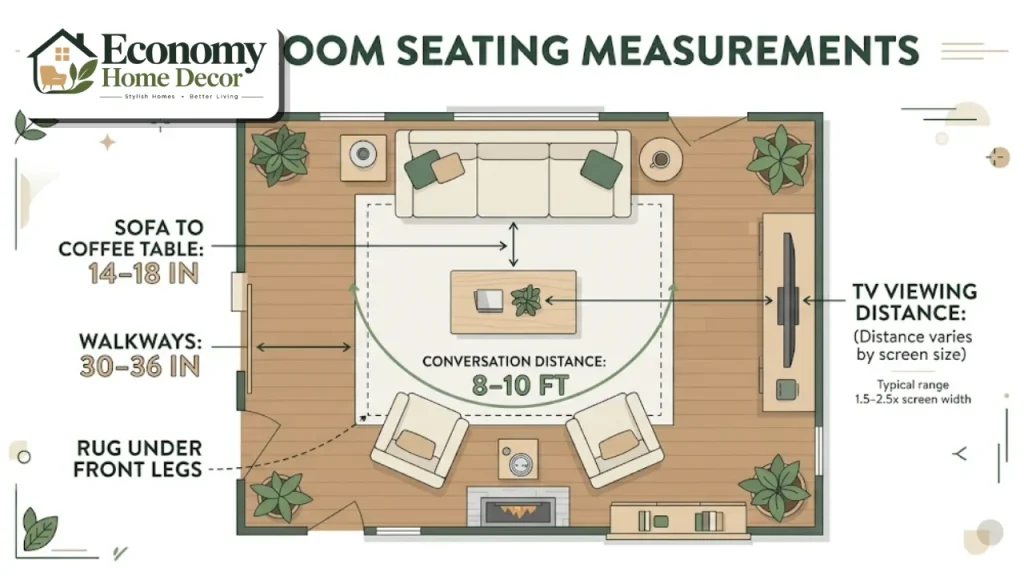
These widely used guidelines help a seating arrangement feel comfortable and easy to move through.
| Space | Recommended distance |
|---|---|
| Sofa to coffee table | About 14 to 18 inches |
| Main walkways | About 30 to 36 inches |
| Between seats in a conversation area | About 4 to 10 feet across |
| Side table height | Roughly level with the sofa arm |
| Rug size | Large enough for at least the front legs of all seating |
| TV viewing distance (1080p) | Roughly 1.5 to 2.5 times the screen’s diagonal |
| TV viewing distance (4K) | Roughly 1 to 1.5 times the screen’s diagonal |
Keeping seats within about 8 to 10 feet of each other makes it easy to talk without raising your voice.
12 Living Room Seating Arrangements
These living room seating arrangements work in a wide range of rooms. Adjust them to your space, focal point and lifestyle.
The classic sofa and two chairs
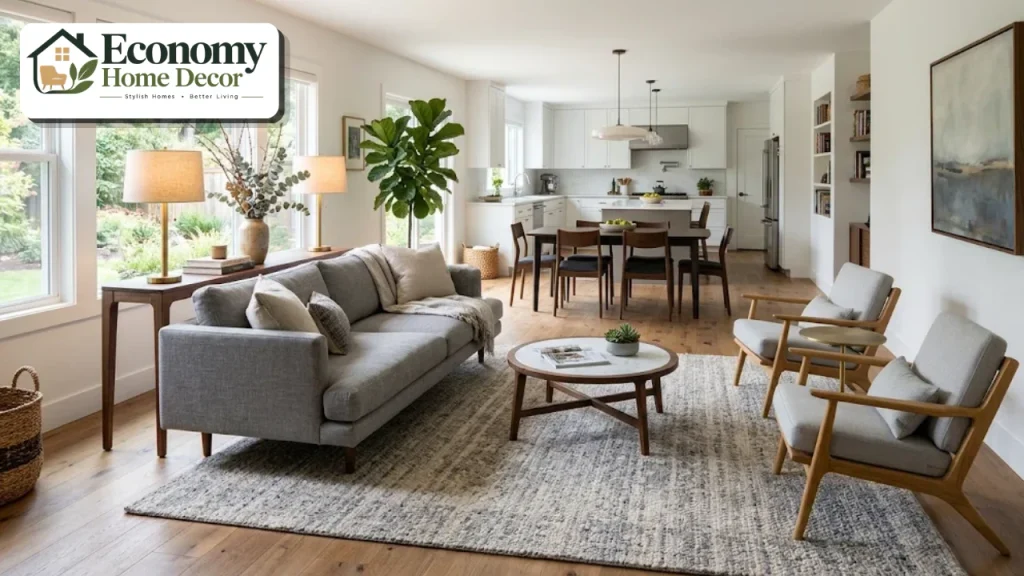
A sofa faces the ,focal point, with two armchairs angled toward it on either side of a coffee table. This creates a U-shaped conversation area that’s balanced and welcoming.
Best for: medium to large rooms, families and entertaining.
Angle the chairs slightly inward, about 30 to 45 degrees, so people can see the focal point and each other. Place a side table or floor lamp between each chair and the sofa.
Facing sofas
Two sofas face each other across a coffee table, with the focal point at one end. It’s symmetrical, elegant,nt and great for conversation.
Best for: formal living rooms and rooms with a fireplace at one end.
Keep the sofas about 8 to 10 feet apart so conversation feels natural. A long rectangular coffee table between them reaches both sides comfortably.
The L-shaped layout
A sofa and loveseat, or a sectional, form an L-shape. The open side faces the focal point or leads into the room.
Best for: corner spaces, open-plan rooms and TV watching.
If the L backs onto a walkway, add a console table behind the longer side. It gives you a surface for lamps and makes the layout feel finished from every angle.
The sectional anchor
A large sectional sofa defines the seating area on its own, often paired with a single accent chair or ottoman.
Best for: family rooms, movie nights and casual living.
Choose a sectional that fits the room with at, least 30 inches of walkway around it. A chaise end is perfect for stretching out, but it can block traffic if placed carelessly.
The U-shaped arrangement
A sofa with chairs or a loveseat on both sides creates a U facing the focal point. It seats many people and keeps everyone focused on the fireplace or TV.
Best for: large rooms and frequent entertaining.
Leave the open end of the U facing the room’s entrance or main walkway, so guests can step in easily.
Four chairs around a coffee table
Instead of a sofa, four armchairs face a central table. It’s stylish, flexible and great for conversation.
Best for: sitting rooms, reading rooms and second living areas.
Swivel chairs work especially well here, letting people turn toward the conversation or a window view.
The floating sofa
The sofa is pulled away from the wall and floats in the room, often with a console table behind it. This creates a defined living zone in open-plan spaces.
Best for: open-plan homes and large rooms.
A rug that extends under the front legs of the sofa and chairs makes a floating layout feel anchored rather than adrift.
Two seating zones
Large rooms can hold two separate seating areas, such as a main TV zone and a smaller reading or conversation nook by the window.
Best for: long or very large living rooms.
Use a separate rug and light source for each zone so both feel complete.
Symmetrical layout
Matching chairs, lamps and side tables on either side of a centered sofa or fireplace, create a calm, formal balance.
Best for: traditional and transitional styles.
Asymmetrical layout
A sofa paired with different pieces, such as one armchair and a bench, creates a relaxed, collected look.
Best for: eclectic, modern and casual rooms.
Circular or conversation pit layout
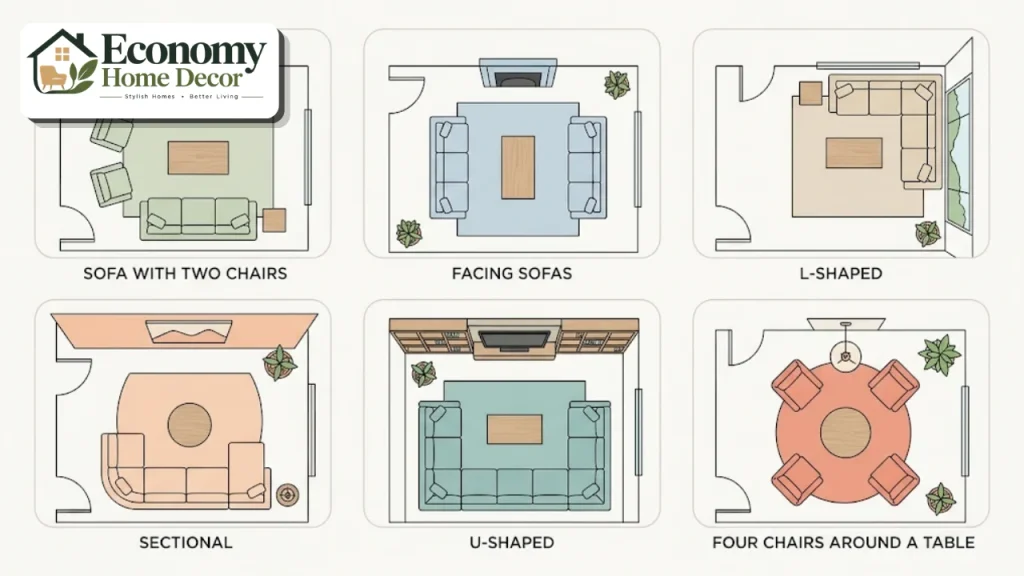
Seating, arranged in a loose circle, sometimes around a round coffee table or ottoman, encourages conversation from every seat.
Best for: entertaining and rooms without a TV focus.
The compact layout
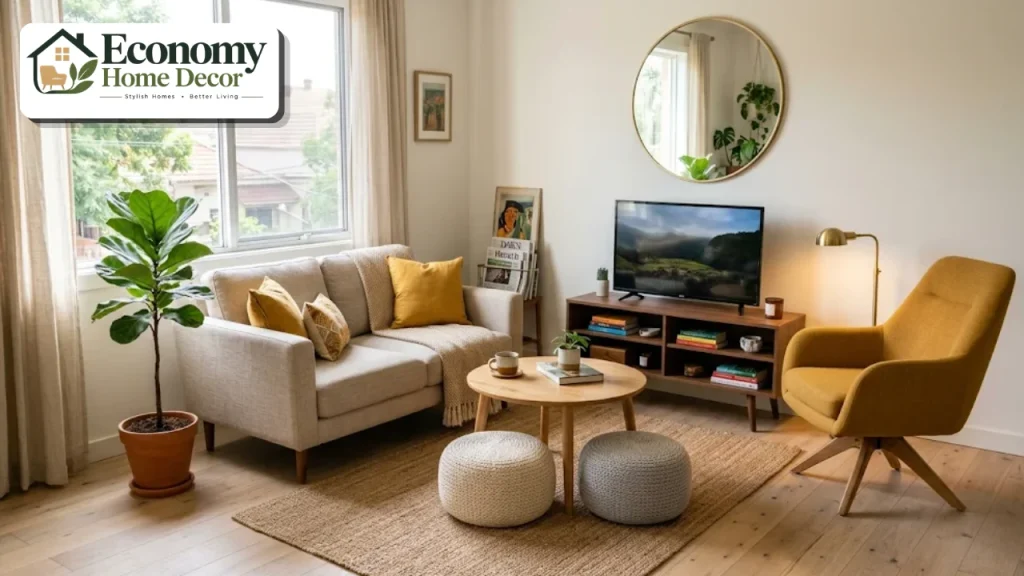
A loveseat with one or two small chairs or poufs keeps a small room comfortable without crowding.
Best for: apartments and small living rooms.
Poufs and small stools can slide under a coffee table or console when not in use, keeping the floor clear.
Comparing Seating Arrangements
| Arrangement | Seats | Room size | Best for |
|---|---|---|---|
| Sofa and two chairs | 5–6 | Medium to large | Families, entertaining |
| Facing sofas | 6 | Medium to large | Formal rooms, fireplaces |
| L-shaped | 4–6 | Small to medium | Corners, TV watching |
| Sectional anchor | 5–7 | Medium to large | Family movie nights |
| U-shaped | 6–8 | Large | Big gatherings |
| Four chairs | 4 | Small to medium | Conversation |
| Floating sofa | 3–5 | Open-plan | Defining zones |
| Two zones | 6–10 | Large | Long rooms |
| Compact | 2–4 | Small | Apartments |
Living Room Seating Arrangements by Room Shape
Square living rooms
Square rooms are the easiest to arrange. A U-shaped or sofa-and-two-chairs layout centered on the focal point works beautifully. Place a square or round coffee table in the middle.
Long, narrow living rooms
Divide the room into two zones, such as a main seating area at one end and a reading nook or desk at the other. Avoid lining all furniture along the long walls, which creates a bowling-alley effect. Float the sofa across the room to break up the length.
Small living rooms
Choose a loveseat or apartment-size sofa, one or two compact chairs and a round coffee table. Furniture with legs keeps the floor visible. Our small apartment ideas and small-space solutions sections have more tips.
Large living rooms
Create two or more seating zones so the room doesn’t feel empty. Use rugs to define each area and float the main seating group away from the walls.
Open-plan living rooms
Float the sofa with its back toward the kitchen or dining area to create a natural boundary. Use a large rug to anchor the seating zone, and coordinate with your dining room and kitchen ideas so the whole space feels connected.
Rooms with awkward features
If you have multiple doors, a corner fireplace or an off-center window, use an L-shaped or asymmetrical layout. Angle chairs toward the focal point and keep walkways clear between doors.
Seating for Entertaining
If you host often, plan seating that’s flexible and sociable.
Keep conversation groups tight. Seats within 8 to 10 feet of each other make talking easy.
Add flexible pieces. Ottomans, poufs, benches and light armchairs can move where needed.
Create perches. A deep window seat or a sturdy ottoman gives guests extra spots to sit.
Leave clear paths to the kitchen, bathroom and entrance so guests can circulate.
Provide surfaces everywhere. Guests need somewhere to put drinks and plates.
For larger gatherings, push smaller pieces to the edges and open up the center so people can mingle.
Seating for Families, Kids and Older Adults
Practical choices make living room seating arrangements work for everyone in the household.
Durable, washable fabrics like performance fabric or leather handle spills.
Rounded coffee tables or upholstered ottomans are safer for small children.
Firm seats with supportive arms are easier for older adults to get in and out of.
Clear walkways reduce tripping hazards.
Floor cushions and poufs give kids their own spots.
Good lighting near every seat helps with reading and safety.
Arranging Around a TV and Fireplace
Many living rooms have both a TV and a fireplace, which can compete for attention.
Stack them. Mount the TV above the fireplace only if the height is comfortable; most people prefer the screen centered close to seated eye level, around 42 inches from the floor.
Side by side. Place the TV on a wall next to the fireplace and angle seating to see both.
Hide the TV. Use a cabinet with doors or an art-style TV so the fireplace stays the focus.
Use a swivel chair. It lets someone turn toward either focal point.
Choosing the Right Seating Pieces
The pieces you choose affect how flexible your arrangement can be.
Sofas
Measure your room and doorways before buying. A sofa should take up roughly two-thirds of the wall or area it faces, leaving space for side tables or walkways.
Sectionals
Sectionals seat a lot of people but are harder to rearrange. Modular sectionals give more flexibility.
Armchairs
Chairs add flexibility and can be moved easily for guests. Swivel chairs are great in open-plan rooms.
Ottomans and poufs
They provide extra seating, footrests and storage. They’re easy to tuck away.
Benches
A bench behind a,floating sofa or under a window adds seating without bulk.
Accent chairs
A statement chair adds personality and can sit in a reading corner or by the window.
Tables, Rugs and Lighting
A seating arrangement isn’t complete without the right supporting pieces.
Coffee tables
Choose a coffee table about two-thirds the length of the sofa and about the same height as the sofa seat or slightly lower. Round tables suit tight spaces and busy households.
Side tables
Every seat should have a surface within reach for a drink or book.
Rugs
The rug should be large enough that at least the front legs of all seating rest on it. A rug that’s too small makes the arrangement look disconnected.
If your living room has hard flooring such as porcelain, vinyl plank or wood-look tile, a rug also adds warmth and reduces echo. Our guide to bathroom design floor ideas compares how these hard flooring materials perform.
Lighting
Layer ceiling lights, floor lamps, and table lamps so every seat has good reading light. Warm bulbs around 2700 to 3000K create a cozy mood.
Styling Your Seating Arrangement
Once the layout works, styling makes it feel finished.
Repeat colors in pillows, throws, and art to tie the seating group together.
Mix textures like linen, wool, leather, and velvet.
Add plants near windows and corners.
Use a console table behind a floating sofa for lamps and decor.
Keep sightlines clear by choosing low-profile pieces in front of windows.
Living room seating arrangements work in any style. For style inspiration, explore our modern home decor, Scandinavian style, farmhouse decor, minimalist interiors, and luxury interiors guides.
Rearranging Through the Seasons
A good seating arrangement doesn’t have to stay fixed all year. Small seasonal shifts keep the room comfortable and fresh.
Winter: pull seating closer to the fireplace, add throws and swap lightweight rugs for thick wool ones.
Spring: turn chairs toward the window to enjoy longer days and more natural light.
Summer: open up the layout for airflow and move bulky pieces away from windows.
Holidays: push smaller pieces to the walls and bring in extra poufs or dining chairs for guests.
Because many arrangements rely on movable chairs and ottomans, these changes take only a few minutes.
Three Real-World Examples
These everyday situations show how living room seating arrangements work in real homes.
A family TV room
A large L-shaped sectional faces a wall-mounted TV above a low wooden media console. A round ottoman serves as a coffee table and extra seat. A big washable rug anchors the space, and a floor lamp sits in the corner of the sectional.
A conversation-focused living room
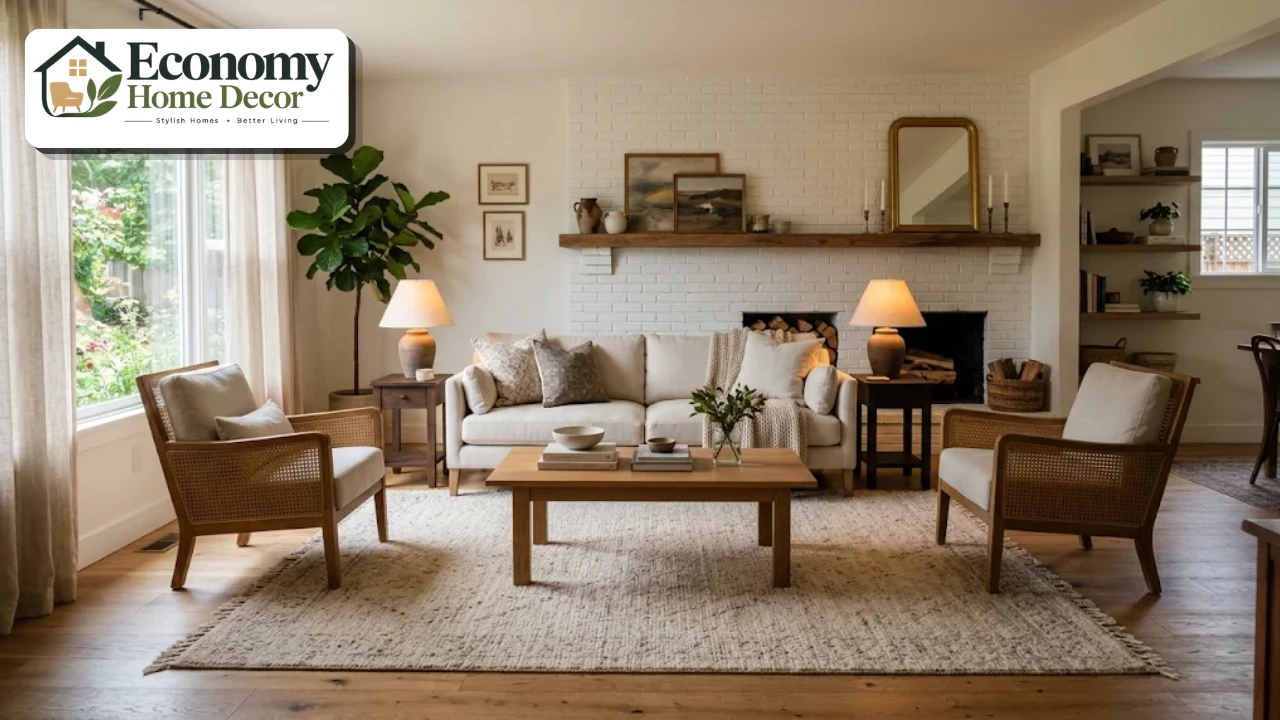
Two linen sofas face each other in front of a fireplace, with a rectangular wooden coffee table between them. Two cane armchairs close the U-shape at the far end. Lamps on matching side tables add warm evening light.
A small apartment living room
A compact loveseat faces a slim TV console, with a single swivel chair angled beside it and two poufs tucked under a small round coffee table. Furniture with legs and a large mirror keep the room feeling open.
Planning Your Seating Arrangement Step by Step
Measure the room, including doors, windows, vents,s and outlets.
Identify the focal point.
Decide how you’ll use the room.
Sketch the layout on graph paper or use painter’s tape on the floor.
Place the largest piece first, usually the sofa.
Add chairs and secondary seating.
Check walkways and clearances.
Add tables, rugs, and lighting.
Live with it for a few days and adjust.
Living Room Seating on a Budget
| Need | Budget version | Bigger investment |
|---|---|---|
| Extra seating | Poufs and floor cushions | Matching armchairs |
| Main seating | Secondhand sofa with new slipcover | New sectional |
| Defining zones | Large affordable rug | Custom rug |
| Side tables | Stools or stacked books | Matching side tables |
| Lighting | Plug-in floor lamps | Hardwired fixtures |
Rearranging your existing furniture costs nothing and often makes the biggest difference. For more ideas, see our guide to budget-friendly decorating.
Common Seating Arrangement Mistakes
Pushing all furniture against the walls. It leaves an empty middle and makes conversation harder.
Choosing a rug that’s too small.
Blocking walkways or doors.
Seating too far apart. More than about 10 feet makes conversation difficult.
No surfaces within reach. Every seat needs a spot for a drink.
Oversized furniture. A huge sectional can overwhelm a small room.
Ignoring the focal point. Seating should face or frame it.
FAQs:
What is the best living room seating arrangement?
The sofa-and-two-chairs layout facing a focal point is one of the most versatile. It balances comfort, conversation, and TV viewing.
How far should a sofa be from a coffee table?
About 14 to 18 inches gives enough legroom while keeping the table within easy reach.
Should furniture touch the walls?
Not necessarily. Floating furniture away from the walls often creates a cozier, more connected seating area.
How do I arrange furniture in a long, narrow living room?
Divide the room into two zones and float the sofa across the room to break up the length.
How do I arrange a living room with a TV and fireplace?
Place them on the same wall if possible, or angle seating so both are visible. A swivel chair adds flexibility.
How much space do I need for walkways?
Aim for about 30 to 36 inches for main walkways.
What size rug should go under a seating area?
At least large enough for the front legs of all seating pieces to rest on it.
How many seats should a living room have?
Plan seating for the people who use the room daily, plus a few flexible extras like poufs or ottomans for guests.
Can I put a sofa in front of a window?
Yes, especially in open-plan rooms. Choose a low-backed sofa so it doesn’t block the view or light, and leave a few inches between the sofa and the wall or curtains.
What are the best living room seating arrangements for small spaces?
A compact loveseat with one or two small chairs, an L-shaped layout in a corner, or four small chairs around a round table all work well. Furniture with legs keeps the room feeling open.