There’s a reason people instinctively reach out to touch a beautiful wooden table. Wood is warm, natural, and full of character. Every grain, knot and color variation tells a story, and no two pieces are ever exactly the same.
That’s why wood living room decor has become one of the most popular ways to create a space that feels calm, welcoming and lived-in. After years of cool gray and stark white interiors, homeowners are turning back to natural materials, and wood leads the way.
Wood works in almost every style, from sleek modern and Scandinavian to rustic farmhouse and rich traditional. It can be the star of the room, like a dramatic paneled wall, or a quiet supporting player, like a simple oak side table.
This guide explains why wood works so well in living rooms, how to choose and mix wood tones, 20 decorating ideas, style inspiration, care tips, real-world examples and budget advice.
Why Wood Works So Well in Living Rooms
Wood brings qualities that few other materials can match.
Warmth. Wood tones make a room feel cozy and inviting, even in winter.
Texture. Grain and natural variation add visual interest without a busy pattern.
Durability. Solid wood furniture can last for generations and can often be refinished.
Versatility. It suits almost every decorating style.
Connection to nature. Natural materials help a room feel calm and grounded. Bringing nature indoors, often called biophilic design, is one of the most talked-about interior trends.
Timelessness. Well-made wood pieces rarely go out of style.
Wood also pairs beautifully with other natural materials, such as linen, wool, leather, stone and rattan, which makes building a layered, comfortable room much easier.
Understanding Wood Tones
Before buying furniture or flooring, it helps to understand the three main wood tone families.
| Tone | Common woods | Feel | Best for |
|---|---|---|---|
| Light | White oak, ash, maple, birch, pine | Airy, fresh, Scandinavian | Small rooms, modern and Nordic styles |
| Medium | Red oak, teak, cherry, honey oak, acacia | Warm, versatile, mid-century | Most living rooms and mixed styles |
| Dark | Walnut, mahogany, espresso-stained wood, ebonized oak | Rich, dramatic, traditional | Larger rooms, luxury and classic styles |
Undertones matter
Wood also has undertones:
Warm undertones: red, orange or yellow, such as cherry, red oak and honey pine.
Cool undertones: gray or ashy, such as weathered oak and some white oaks.
Neutral undertones: balanced, such as natural white oak and some walnut.
Look at wood samples in your own light. A wood that looks neutral in the store can look orange in a sunny room.
How to Mix Wood Tones
Many people worry that everything must match. In fact, mixing wood tones usually looks more natural and collected.
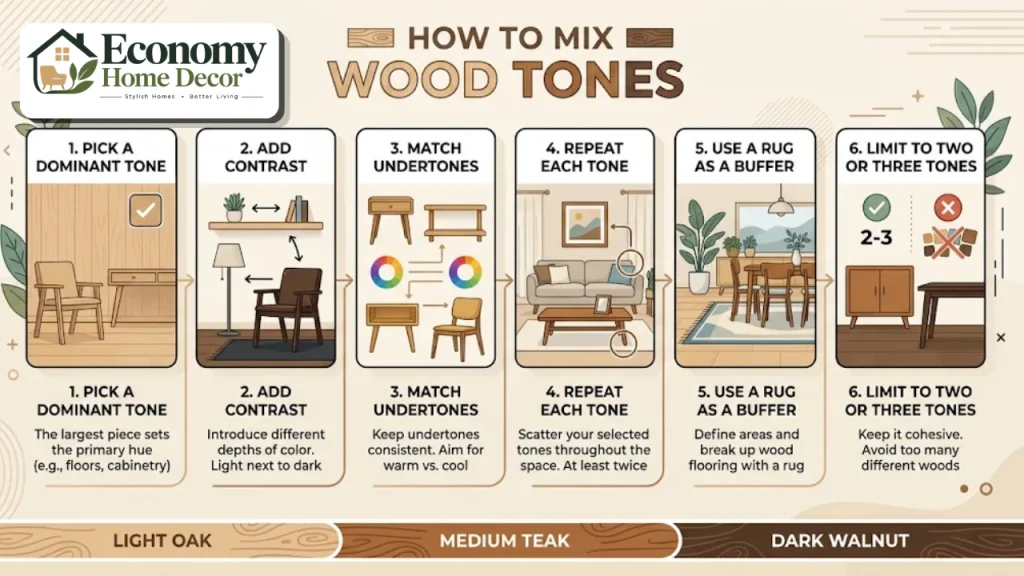
Pick a dominant tone
Choose one main wood tone, often your floor or largest furniture piece, and let it cover most of the wood in the room.
Add contrast
Use a second, clearly different tone for contrast. Pairing light oak floors with a dark walnut coffee table looks intentional. Two tones that are almost the same can look like a mismatch.
Match undertones
Woods with similar undertones tend to look harmonious, even if their colors differ.
Repeat each tone
Use each wood tone at least twice, such as a walnut coffee table and walnut picture frames, so it feels deliberate.
Use a rug as a buffer
A rug between wood flooring and wood furniture separates the tones and stops them from clashing.
Limit the number of tones
Two or three wood tones in one room usually look best. More can start to feel chaotic.
20 Wood Living Room Decor Ideas
These wood living room decor ideas range from big architectural features to small accents. Mix and match to suit your space and budget.
Wood flooring as the foundation
Wood or wood-look floors set a warm base for the whole room. Wide-plank oak feels modern and relaxed, while herringbone or chevron adds classic elegance.
If you have pets or children, engineered wood, luxury vinyl plank, and wood-look porcelain offer the look with extra durability. Our guide to bathroom design floor ideas explains how these materials compare in moisture and wear.
A wood-paneled accent wall
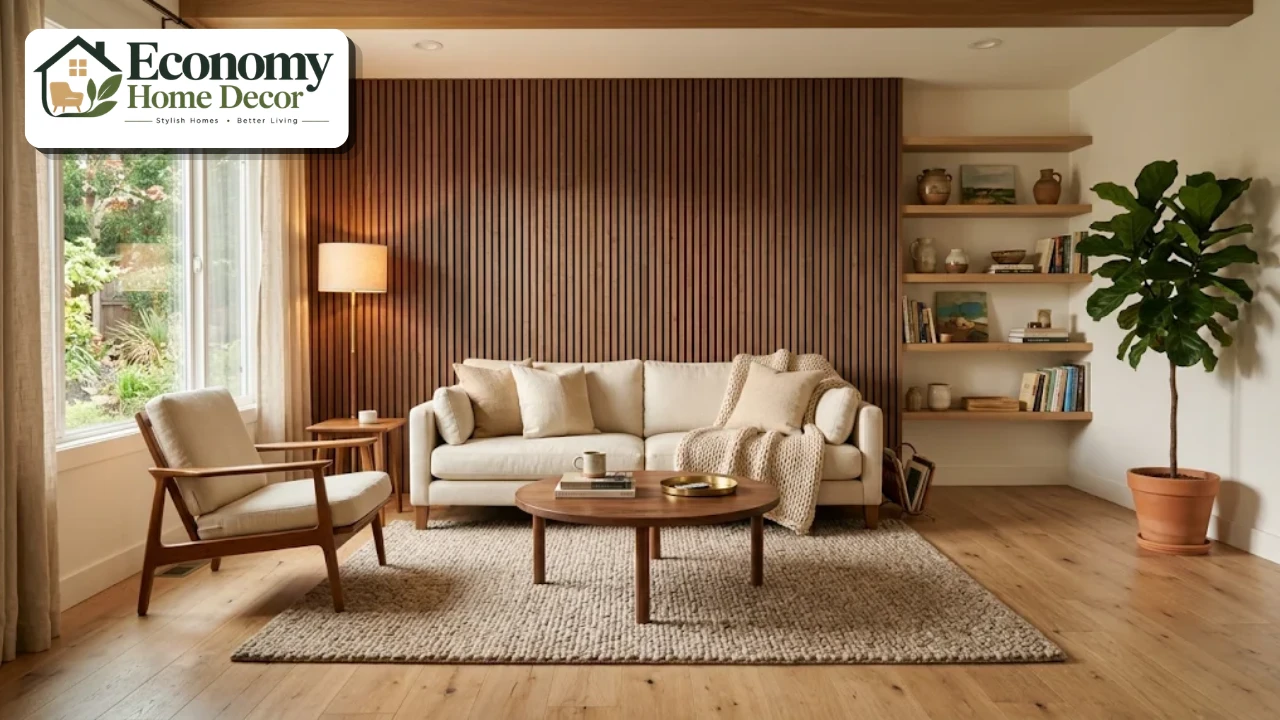
Wood paneling, slats or shiplap on one wall instantly adds warmth and texture. Vertical slat walls behind a sofa or TV feel modern, while traditional paneling suits classic homes.
Slat panels can also improve acoustics by breaking up sound reflections.
Exposed wood ceiling beams
Real or faux wood beams add architectural character, especially in rooms with high ceilings. They suit farmhouse, rustic,c and Mediterranean styles.
Lightweight faux beams are an affordable way to get the look without structural work.
A statement wooden coffee table
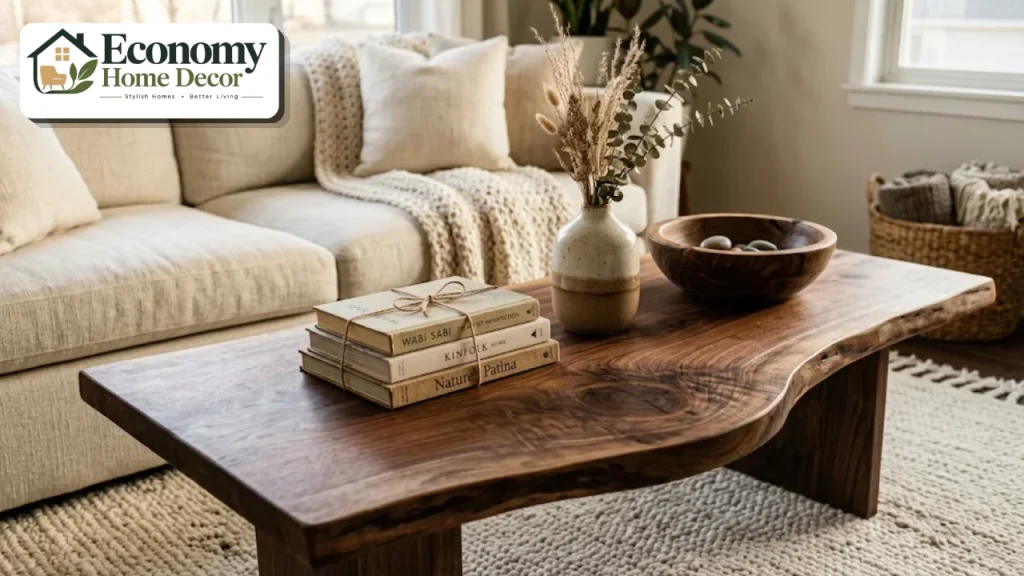
A solid wood coffee table, whether a chunky live-edge slab, a round pedestal table or a sleek mid-century design, can anchor the whole seating area.
Choose a size about two-thirds the length of your sofa, and leave about 18 inches between the sofa and table.
Built-in wooden shelving
Wood bookshelves or built-ins around a fireplace or TV add storage and warmth. Fill them with books, ceramics, plants and a few personal objects, leaving some empty space so they don’t feel cluttered.
A wooden media console
A long, low wood console hides cables, gam,es and remotes while adding warmth beneath the TV. Fluted or slatted fronts add texture.
Choose a console about as wide as the TV or wider, so the screen doesn’t overpower it, and keep the top styled with just a few objects.
Wood-framed furniture
Sofas and armchairs with exposed wood frames, such as mid-century lounge chairs or Scandinavian-style sofas, bring warmth without overwhelming the room.
They’re a smart way to add wood to a room that already has wood floors, because the exposed frame reads as a lighter accent rather than a big block of color.
Wooden side tables and stools
Small pieces like stump side tables, carved stools, and nesting tables add natural texture and are easy to move around.
A mix of shapes, such as one round stump and one square stool, keeps the room feeling relaxed and collected.
A wood fireplace surround or mantel
A chunky reclaimed wood mantel on a brick or stone fireplace makes a striking focal point. A wood-clad fireplace wall feels modern and warm.
If you don’t have a fireplace, a wooden ledge or shelf can still create a mantel-style focal point for art, candles and greenery.
Wooden window treatments
Wood blinds, plantation shutters, or bamboo shades filter light beautifully and add natural texture at the windows.
Pair wood blinds with linen curtains for softness, especially in rooms with lots of hard surfaces.
Wooden picture frames and mirrors
Wood-framed art and mirrors repeat wood tones around the room and tie the design together. Mixing frames in one wood tone looks especially cohesive.
A gallery wall of mismatched wooden frames can also work, as long as the art shares a common color palette.
Wooden decor accents
Bowls, trays, candlesticks, sculptures,s and vases in wood add small doses of warmth. Group them in odd numbers on a coffee table or shelf.
Handmade or turned wooden pieces add an artisan feel and make lovely conversation starters.
Wooden lighting
Wood-base table lamps, wooden pendant lights, or floor lamps with wooden legs bring warmth to lighting, which is often all metal or glass.
Warm bulbs make wooden lamp bases glow, adding to the cozy mood in the evening.
A wooden ceiling
A tongue-and-groove wood ceiling creates a cabin-like, cozy feel. Light-toned wood keeps it airy; darker wood feels dramatic.
Reclaimed and salvaged wood
Reclaimed barn wood, old floorboards,s or salvaged beams bring history and texture. Use them for shelves, a mantel, a coffee table,le or an accent wall.
Before bringing reclaimed wood indoors, make sure it has been cleaned, dried and treated for pests, and check older painted wood for lead paint.
Live-edge furniture
Live-edge tables keep the natural shape of the tree’s edge, making each piece one of a kind. They work beautifully as coffee tables, console tables, or shelving.
Keep surrounding furniture simple, so the organic shape stands out.
Wooden room dividers
In open-plan homes, a wood slat divider or open bookcase can separate the living area from the dining or entry space while letting light through.
Rattan, cane and bamboo
These natural wood-related materials add a lighter, airy texture. A cane-back chair, rattan pendant or bamboo shelf pairs well with solid wood.
Wooden window seat
A built-in wooden bench under a window adds seating, storage, and a cozy reading nook.
A wood and plant combination
Wood and greenery are natural partners. Place plants on wooden stands, shelves,s or stools for an organic, calming look.
Wood Living Room Decor by Style
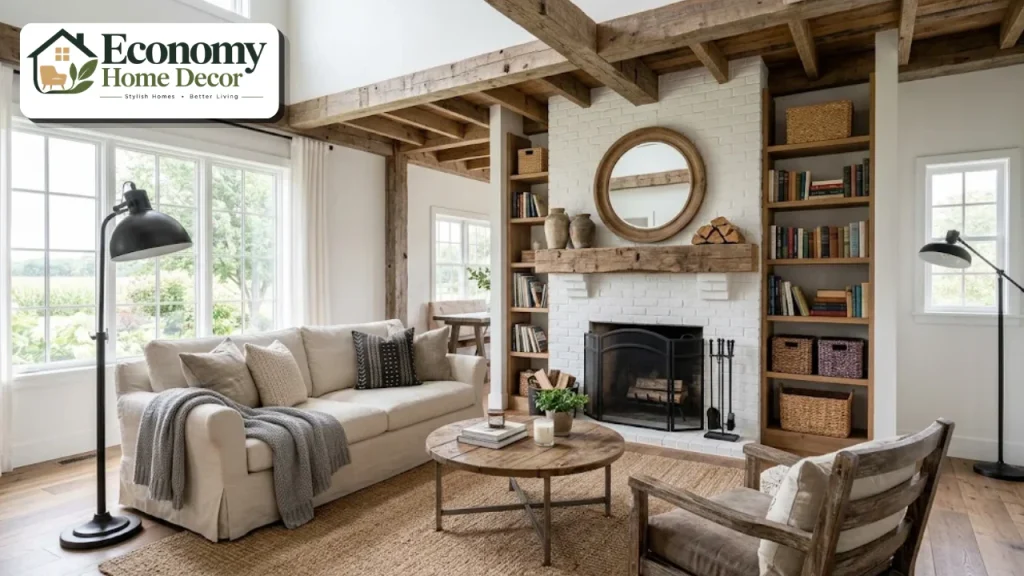
Wood living room decor adapts to almost any style. Here’s how it looks in the most popular ones.
Scandinavian
Light woods like white oak, ash and birch, combined with white walls, simple furniture and cozy textiles. Explore our Scandinavian style section for more.
Modern and modern organic
Clean-lined wood furniture, slatted walls, natural stone and neutral textiles. See our modern home decor ideas.
Mid-century modern
Teak and walnut furniture with tapered legs, low profiles and warm, earthy colors like mustard, olive and burnt orange.
Modern farmhouse
Reclaimed wood, beams, shiplap, and chunky farmhouse tables mixed with linen sofas and black accents. Our farmhouse decor guide has more ideas.
Rustic and cabin
Dark, knotty wood, log details, leather, and wool create a warm lodge-like feel.
Japandi
A blend of Japanese and Scandinavian design, with light and dark wood, low furniture, natural fibers and minimal clutter.
Traditional and luxury
Rich, polished woods like mahogany and walnut, carved details and paneled walls. See our luxury interiors ideas.
Minimalist
Few pieces in one or two wood tones, with clean surfaces and plenty of open space. Our minimalist interiors guide shows how.
Choosing the Right Wood Finish
The finish changes both the look and the durability of wood.
| Finish | Look | Pros | Things to know |
|---|---|---|---|
| Matte or natural oil | Soft, raw, close to bare wood | Modern, easy to touch up | Needs re-oiling from time to time |
| Satin lacquer | Gentle sheen | Durable, easy to clean | Scratches can be harder to repair |
| High gloss | Shiny, polished | Elegant, reflects light | Shows fingerprints and dust |
| Wax | Warm, traditional glow | Beautiful patina | Needs regular maintenance |
| Painted or stained | Any color | Hides older or mismatched wood | Can chip over time |
Matte and oiled finishes suit modern, Scandinavian and Japandi rooms, while satin and polished finishes suit traditional and luxury looks.
Connecting Wood Across an Open-Plan Space
Many living rooms flow into a kitchen or dining area, so it helps to think about wood across the whole space.
Use one continuous floor to tie the zones together.
Repeat a wood tone from the living room in the dining table or kitchen island.
Keep the number of wood tones consistent, ideally two or three across the open space.
Echo materials, such as a walnut coffee table and walnut dining chairs.
Separate zones with rugs so each area feels defined.
Our dining room and kitchen ideas sections show how to carry warm wood tones through an open-plan home, so your wood living room decor feels connected rather than isolated.
Colors That Pair Well With Wood
The right wall and fabric colors make wood tones shine.
| Color | Works with | Effect |
|---|---|---|
| Warm white and cream | All wood tones | Fresh, timeless |
| Sage and olive green | Light and medium woods | Natural, calming |
| Deep green | Walnut, oak | Rich, cozy |
| Navy blue | Light oak, teak, walnut | Classic contrast |
| Terracotta and rust | Light and medium woods | Warm, earthy |
| Charcoal | Light woods | Modern, dramatic |
| Greige and taupe | All wood tones | Soft, sophisticated |
Avoid matching wall color too closely to wood tones. A little contrast lets the wood stand out.
Textiles and Materials That Complement Wood
Wood looks best when layered with other textures.
Linen and cotton for sofas, cushions,s and curtains.
Wool and jute rugs for warmth and texture underfoot.
Leather armchairs or ottomans that age beautifully alongside wood.
Stone and marble for a fireplace, side table or decor.
Metal accents in brass, bronze,ze or matte black for contrast.
Plants for color and life.
Too much wood without contrasting textures can make a room feel heavy, so balance it with soft fabrics and lighter surfaces.
Wood Living Room Decor for Small Spaces
Wood can work beautifully in a small living room with a few smart choices.
Choose light woods like oak, ash, or birch to keep the room bright.
Pick furniture with legs to show more floor.
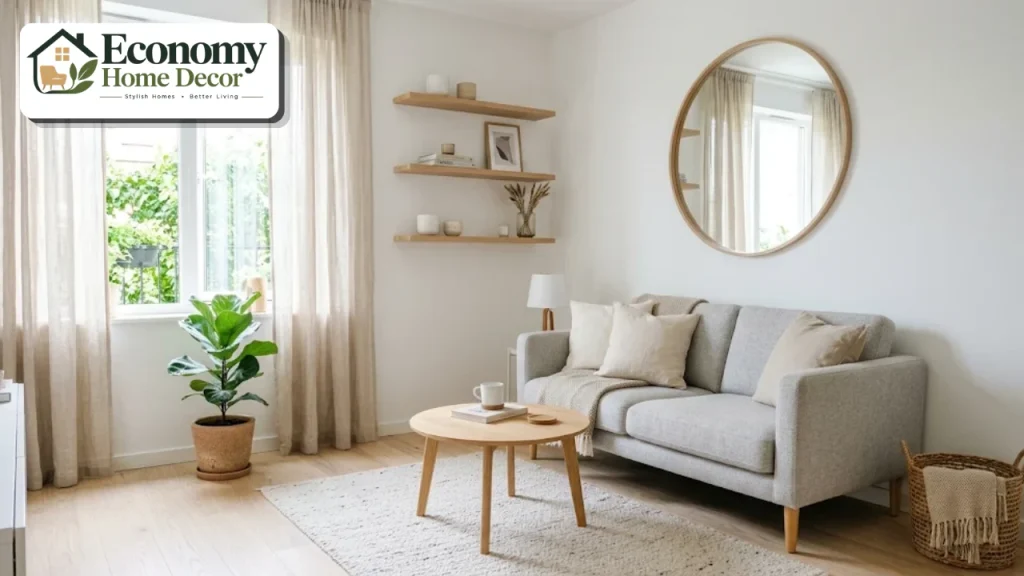
Use wall-mounted wooden shelves instead of bulky bookcases.
Add one statement wood piece rather than many heavy ones.
Pair wood with light walls and mirrors to bounce light.
For more ideas, see our small apartment ideas and small-space solutions.
Lighting a Wood-Filled Living Room
Lighting changes how wood looks. Warm light enhances its glow, while cool light can make it look flat or yellow.
Use warm bulbs around 2700 to 3000K.
Layer lighting with ceiling lights, floor lamps,s and table lamps.
Highlight textures with picture lights or wall washers on paneled walls.
Maximize daylight, which shows wood’s natural color best.
Caring for Wood in the Living Room
Good care keeps wood looking beautiful for years.
Dust regularly with a soft, dry or slightly damp cloth.
Use coasters and placemats to prevent water rings and heat marks.
Avoid harsh cleaners; use products made for wood finishes.
Keep wood out of direct, harsh sunlight or rotate pieces to prevent uneven fading.
Maintain stable humidity, since very dry or damp air can cause cracking or warping.
Refinish or oil solid wood pieces when they start to look tired.
Three Real-World Examples
These everyday situations show how wood living room decor comes together in real homes, from small apartments to family rooms.
A Scandinavian-inspired apartment
White oak floors, a light ash coffee table,le and a simple wood-framed sofa keep the room bright. A white wool rug, linen curtains and a few plants add softness.
A walnut picture frame and a dark wood stool add subtle contrast.
A modern farmhouse family room
Wide-plank oak floors, reclaimed wood beams and a chunky barnwood mantel give the room character. A cream slipcovered sofa, a jute rug and black metal lamps balance the wood.
Built-in wooden shelves beside the fireplace hold books and baskets for toys.
A warm mid-century living room
A walnut media console, teak lounge chair, and round walnut coffee table sit on a light oak floor. Olive green walls, a mustard throw and a brass floor lamp complete the retro-inspired look.
Wood Living Room Decor on a Budget
| Idea | Budget version | Bigger investment |
|---|---|---|
| Floors | Large rug or luxury vinyl plank | Solid or engineered hardwood |
| Accent wall | DIY slat wall or peel-and-stick panels | Custom wood paneling |
| Furniture | Thrifted or refinished wood pieces | New solid wood or custom furniture |
| Beams | Faux wood beams | Reclaimed structural beams |
| Decor | Wooden bowls, trays and frames | Live-edge or handcrafted pieces |
| Shelving | Floating wood shelves | Built-in cabinetry |
Thrift stores and estate sales are full of solid wood furniture that only needs a light sanding and fresh oil. For more money-saving ideas, see our guide to budget-friendly decorating.
Common Mistakes to Avoid
Matching everything exactly. It can look flat and like a furniture set.
Using tones that are almost the same. Small differences look like mistakes.
Too much wood without contrast. Balance with fabrics, stone and color.
Ignoring undertones. Clashing warm and cool woods can look off.
Poor lighting. Cool bulbs make wood look dull.
Skipping rugs. Rugs separate wood floors from wood furniture.
Neglecting care. Water rings and dust dull wood quickly.
FAQs:
Can you mix wood tones in a living room?
Yes. Choose one dominant tone, add a clearly contrasting second tone, match undertones where possible,le and repeat each tone at least twice.
What wall color goes best with wood?
Warm whites, creams, sage green, navy, terracotta,tta and greige all pair well with wood. A little contrast helps the wood stand out.
How do I make a wood living room feel modern?
Use clean-lined furniture, light or medium woods, slatted walls, neutral textiles and black or brass accents.
Is too much wood bad in a living room?
It can feel heavy. Balance wood with soft fabrics, light walls, stone, metal and plants.
Which wood is best for living room furniture?
Oak, walnut, teak, maple and ash are popular for durability and beauty. Solid wood or quality veneer over plywood lasts longest.
Do wood floors and wood furniture have to match?
No. Contrast often looks better. A rug between them helps separate the tones.
How do I protect wood furniture from sunlight?
Use curtains, blinds or UV-filtering window film, and rotate pieces occasionally to prevent uneven fading.
What decor accessories go with wood?
Linen cushions, wool throws, jute rugs, ceramic vases, brass lamps, stone accents and plenty of plants.
What is the best wood for a living room accent wall?
Oak, walnut and pine are popular choices. Pre-finished slat panels and MDF with a wood veneer offer a more affordable, easier-to-install option.
Is wood living room decor still in style?
Yes. Warm wood and natural materials have replaced cool gray and stark white in many homes, and wood’s timeless appeal means it rarely goes out of style.